
We are a 5 ⭐ Rated Business on Google
Canton & Northeast Ohio's #1 Storm Damage Restoration Company
Our team responds quickly after severe weather to secure damaged areas, remove water, dry affected materials, clear debris, and begin the repairs needed to restore your property.
OR CALL US 24/7
(330) 850-3473

Storm Restoration Services you can count on in Canton, OH
Severe weather can damage several areas of your property within minutes. High winds, heavy rain, hail, fallen trees, and flooding can tear away roofing materials, damage siding, break windows, and allow water to enter your home or business.
Our storm damage restoration team responds quickly to assess the property, secure exposed areas, remove standing water, and prevent additional damage. From emergency tarping and structural drying to debris removal and complete reconstruction, we provide the services needed to move your property toward a full recovery.
SHORT ON TIME & CAN’T CALL? GET A FAST QUOTE TODAY!
For more information or to schedule service, call us at (330) 850-3473 or fill out the form below. Our team will respond as quickly as possible.

Fast 24/7 Storm Damage Response
Storm damage can continue getting worse after the weather passes. Our team responds quickly to assess the situation, secure the property, and begin emergency mitigation.

Certified Restoration Done the Right Way
Every storm damage project follows IICRC standards for safe, thorough, dependable results.

Proven Experience That Shows
Our team brings hands-on storm damage restoration experience to every property.

Locally Owned & Operated
We’re a locally owned and operated business based in Canton, OH, proudly serving homeowners and businesses throughout Northeast Ohio.
CERTIFICATIONS AND AFFILIATIONS
When Should You Call a Storm Damage Restoration Company in Canton, OH?
1. Immediately After a Storm Damages Your Property
Contact a storm damage restoration company as soon as it is safe to do so. Missing roofing, broken windows, damaged siding, and other structural openings can leave your property exposed to additional rain, wind, debris, and unwanted entry. Fast emergency tarping, board up service, and damage assessment can help stabilize the property while a complete repair plan is prepared. If you notice downed power lines, a gas odor, or serious structural movement, stay away from the area and contact emergency services or the appropriate utility provider first.
2. When You Notice Roof Damage or Leaks After a Storm
Missing shingles, damaged flashing, punctures, fallen branches, and lifted roofing materials can allow water to enter the attic and walls. Warning signs may include ceiling stains, dripping water, damp insulation, peeling paint, or moisture around light fixtures. Even a small roof opening can create widespread interior damage when another round of rain arrives. Our team can inspect the affected areas, provide emergency tarping, address water intrusion, and complete necessary roofing and interior repairs.
3. After Flooding From Heavy Rain
Heavy rainfall can overwhelm drainage systems, enter basements, and cause water to spread across flooring and into walls. Standing water should be removed quickly because moisture can remain trapped underneath flooring, behind drywall, and inside insulation long after the visible water is gone. Our team extracts the water, removes damaged materials when necessary, and uses professional drying and dehumidification equipment to help prevent continued structural damage and mold growth.
4. When Trees or Debris Damage Your Home or Business
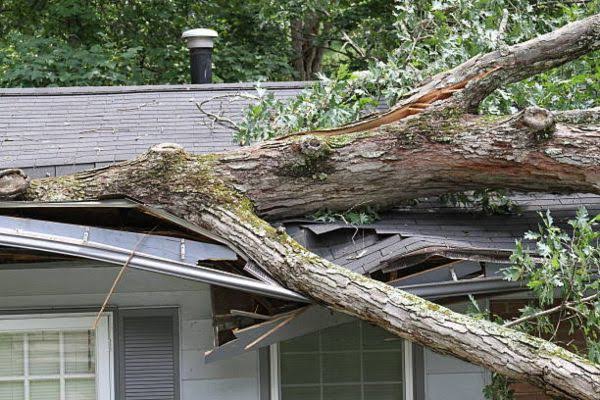
Fallen trees, large branches, and windblown debris can puncture roofing, crush gutters, break windows, damage siding, and weaken structural components. These openings may expose the interior of your property to rain and create serious safety concerns around unstable materials. Avoid moving large debris or entering an area that appears structurally unsafe. Our team can assess the damage, secure exposed areas, coordinate debris removal, and begin the repairs needed to restore the property.
5. If Storm Damage Leads to Water Intrusion
Storm water can enter through damaged roofing, broken windows, exterior openings, foundation cracks, or backed up drainage systems. Even when the amount of water appears small, moisture may travel behind walls, underneath flooring, and into insulation where it can remain hidden. We use professional extraction, moisture detection, air movement, and dehumidification equipment to locate affected areas and dry the structure completely before repairs begin.
6. After Power Outages Cause Additional Property Issues
Extended outages can shut down sump pumps, heating systems, air conditioning, refrigeration, and other equipment that helps protect your property. A failed sump pump may lead to basement flooding, while electrical surges and temperature changes can create additional damage after service is restored. Our team can address resulting water and property damage, remove affected materials, dry the structure, and coordinate necessary repairs with the appropriate professionals.
What's Our Process Like When Doing Storm Damage Restoration in Canton, OH?
Our storm damage restoration process begins with a complete assessment of the property to determine the extent of wind, rain, hail, flooding, and structural damage. We identify immediate safety concerns, document affected areas, and develop a restoration plan based on the specific needs of your home or business.
Our team then secures exposed areas, extracts standing water, removes debris, and dries affected materials. Once the property is stable and dry, we complete the repairs and reconstruction needed to restore damaged roofing, siding, drywall, flooring, and other parts of the structure.
Our Storm Damage Restoration Process Includes:
- Emergency roof tarping and board up services to protect damaged openings from additional rain, wind, debris, and unwanted entry
- Repairs and reconstruction for storm damaged roofing, siding, drywall, flooring, ceilings, and structural components
- Clear communication and insurance coordination throughout the restoration process when a covered claim is involved
We've Been Doing Storm Damage Restoration in Canton, OH for Years!
Our team has helped homeowners and businesses throughout Canton and Northeast Ohio recover from high winds, heavy rain, hail, flooding, fallen trees, and other severe weather events. Because every storm affects a property differently, we carefully inspect each damaged area before creating a restoration plan.
Our experience in water damage restoration, structural drying, construction, and reconstruction allows us to manage the project from emergency mitigation through final repairs. We work efficiently, keep you informed, and focus on restoring your property with careful workmanship and lasting results.
Our Emergency Storm Damage Response Includes:
- Rapid Property Assessment: Our team inspects the roof, exterior, interior, and affected structural materials to determine the extent of the storm damage
- Emergency Tarping and Board Up: Damaged roofing, windows, doors, and other openings are temporarily secured to help protect the property from further exposure
- Water Extraction and Structural Drying: Standing water is removed and professional drying equipment is used to address moisture throughout the affected areas
- Debris and Damaged Material Removal: Fallen debris and building materials that cannot be safely restored are carefully removed from the property
- Repairs and Complete Reconstruction: We repair damaged roofing, siding, drywall, flooring, and other structural components needed to restore the property
- Insurance Documentation and Coordination: When applicable, we document visible damage and communicate with your insurance provider while all coverage decisions remain with your carrier
Get a Quote Today!
Frequently Asked Questions
Does 1st Choice Restoration & Construction handle storm damage restoration in Canton, OH?
Yes. We provide storm damage response and repair for homes and businesses in Canton and throughout Stark County, including North Canton, Massillon, Alliance, Louisville, Jackson Township and Plain Township. That covers emergency tarping and board up, roof, siding and gutter replacement, tree impact repairs, water intrusion cleanup and drying, and the full reconstruction that follows.
What should I do immediately after a storm damages my property?
Safety first. Stay away from downed power lines and assume any line on the ground is live. Do not enter a structurally compromised building, and do not get on your own roof to inspect it after a storm, which is how a property claim turns into an injury.
Once it is safe, photograph and video everything from the ground before any cleanup, including the exterior, the interior, and any water that came in. Call your insurance carrier to open the claim. Take reasonable temporary measures to prevent further damage, such as tarping a roof opening or moving belongings away from a leak, and keep receipts for anything you buy to do it, because most policies reimburse those costs.
Do you provide emergency tarping and board up after a storm?
Yes, and it is usually the first visit. Roof tarping, board up of broken windows and openings, and temporary structural support keep weather, animals and trespassers out while the claim is processed.
This matters beyond the obvious. Most policies require the property owner to take reasonable steps to prevent additional damage, so if rain enters through an open roof for three days before anyone covers it, the carrier can dispute that portion of the loss as preventable.
What types of storm damage do you handle?
Wind and hail damage to roofing, siding, gutters, soffit, fascia and windows. Tree and limb impact, including structural repairs where a limb penetrated the roof or wall. Water intrusion from wind-driven rain and roof openings, with extraction and structural drying. Basement flooding from storm-driven groundwater or sump pump failure during outages. Winter storm damage including ice dams, roof snow load and pipes that froze when the heat went out.
Because we handle both the mitigation and the reconstruction, the same company that dries the property also rebuilds it.
What storm damage is most common in the Canton area?
Northeast Ohio gets damage in every season. Spring and summer bring hail and straight-line winds that strip shingles and dent siding, gutters and roof vents, plus heavy rainfall that overwhelms sump systems, often during the same power outage that disabled the pump.
Winter shifts the pattern to ice dams that back water up under shingles and into ceilings, snow load on flat and low-slope roofs, wind-driven snow entering through ridge and gable vents, and pipe freezes during extended outages. Fallen limbs and trees happen year round, usually from wind on saturated ground or ice weight on branches.
How do I know if my roof has hail damage?
Hail damage on asphalt shingles is frequently invisible from the ground. What you can check safely from the yard: dents on gutters, downspouts, metal roof vents, flashing and the air conditioner's condenser fins, and granules collecting at the bottom of downspouts. Damage to those metal surfaces usually means the shingles took hits too.
On the roof itself, hail leaves bruises, which are soft dark spots where granules were knocked loose and the mat underneath is exposed. Those spots fail over the following seasons rather than leaking immediately, which is why a roof that looks fine can still be a legitimate claim. Do not climb up to look yourself. We inspect it, document it and can be present when the adjuster comes out.
Does homeowners insurance cover storm damage?
Wind, hail, lightning, and falling trees and limbs are covered perils under standard homeowners policies, as is the resulting water intrusion when a storm creates an opening in the building. Flooding from rising surface water or groundwater is not, and requires separate flood coverage.
Two policy details commonly surprise people. Many policies carry a separate wind and hail deductible, often a percentage of the dwelling value rather than a flat dollar amount, which can be substantially higher than your standard deductible. And some carriers apply actual cash value rather than replacement cost to older roofs, meaning depreciation comes out of the payout. Check both with your agent before you need them.
How long do I have to file a storm damage claim?
Your policy sets the deadline, and many contain a suit limitation provision that also caps how long you have to take legal action. Timeframes vary by carrier and by policy, so read yours or ask your agent rather than assuming.
Practically speaking, file promptly regardless of the deadline. The longer you wait, the harder it is to prove the damage came from that storm rather than from age or a later event, and carriers deny delayed claims on exactly that basis. After a hailstorm, get the property inspected even if you see nothing from the ground.
Should I sign with a contractor who knocks on my door after a storm?
Be careful. Major hail and wind events draw out-of-town crews who work an area for a season and are gone before any warranty means anything. The warning signs are consistent: pressure to sign on the spot, an offer to cover or waive your deductible, which is insurance fraud in Ohio and not a favor, a demand for a large payment before work begins, no local address or license, and paperwork that assigns your claim rights or authorizes them to negotiate directly with your carrier.
Read anything they hand you before signing. Some of these forms are contracts that lock you in regardless of the claim outcome, and some are assignments of benefits that hand over control of your claim. Choosing a local company with a physical address in Stark County is the simplest protection, because they are still here in three years when a warranty question comes up.
Will filing a storm claim raise my insurance rates?
Weather claims are generally treated differently from at-fault claims, since a hailstorm is not something you caused, and widespread events typically affect rates across an entire region rather than one policyholder. That said, carriers vary in how they handle claim history, and multiple claims in a short period can affect renewal.
The more useful comparison is the alternative. Unrepaired storm damage gets worse, and a carrier can deny a future claim on damage traced back to a storm you never reported. If the damage exceeds your deductible meaningfully, filing usually makes sense. Your agent can tell you how your specific carrier treats it.
Do you work with insurance adjusters on storm claims?
Yes. We document the damage with photographs and a room-by-room and elevation-by-elevation scope, write the estimate in the line item format carriers use, and we can be on site during the adjuster's inspection to make sure damage on the roof and upper elevations is actually seen and recorded.
That last part matters more than most homeowners realize. Adjusters inspect a great many properties after a regional storm event, and items that are not documented at the inspection are the items that get missed in the scope.
A tree fell on my house. What happens now?
Get everyone out of the affected part of the structure and stay out until it is assessed, particularly if the roof or a bearing wall was struck. Do not attempt removal yourself, especially if the tree is touching power lines or holding weight against the structure.
Our sequence is to stabilize and support the structure, coordinate safe removal, tarp and secure the opening, then address water that entered through it before moving to framing, roof deck and interior repairs. On coverage: damage to your structure from a fallen tree is generally covered regardless of whose tree it was, and most policies include a limited amount toward debris removal. Whether your neighbor's insurance is involved usually comes down to whether the tree was visibly dead or hazardous beforehand.
Do you handle water damage from a storm?
Yes, and it is part of most storm jobs. Wind-driven rain through a roof opening, a broken window or damaged siding soaks insulation, drywall, ceilings and flooring, and it travels well beyond the point of entry.
We extract standing water, remove unsalvageable materials, and set air movers and commercial dehumidifiers with daily moisture monitoring, running the drying at the same time as the exterior is secured. Timing matters because mold can begin developing in damp materials within roughly 24 to 48 hours, and a storm claim left wet becomes a mold claim on top of it.
Do you handle ice dams and winter storm damage?
Yes. Ice dams form when heat escaping into the attic melts snow on the upper roof, the water runs down and refreezes at the cold eaves, and the resulting ridge of ice backs water up under the shingles and into the ceiling and walls below.
We handle the interior water damage and the roof repairs, but the permanent fix is upstream: sealing attic air leaks, correcting insulation levels and restoring proper soffit-to-ridge ventilation so the roof deck stays cold. Removing the ice without addressing that is a treatment you will repeat every winter.
My pipes froze during a power outage. Is that storm damage?
It is usually handled as a water damage claim, and coverage typically depends on whether you took reasonable steps to prevent the freeze. If the home was occupied and heated and the outage was beyond your control, a burst pipe is generally covered. If the property was vacant with the heat shut off, many policies exclude it.
We handle the full response: extraction, structural drying, removal of saturated materials, and repairs to the affected walls, ceilings and flooring once the plumbing repair is complete.
How long does storm damage restoration take?
Emergency tarping and board up happen immediately. Water extraction and structural drying typically run three to five days. Roof replacement is usually a one to three day job once materials are on site.
Full interior repairs after significant water intrusion or structural damage commonly run several weeks to a few months. After a widespread regional storm the constraint is often neither labor nor materials but adjuster availability and scope approval, since every carrier is working the same event at once. We tell you which parts of the schedule we control and which we do not.
What will storm damage repairs cost me out of pocket?
On a covered claim, typically your deductible, with the carrier covering the approved scope. The variables are which deductible applies, since many policies carry a higher percentage-based wind and hail deductible, and whether your roof is covered at replacement cost or actual cash value, because depreciation on an older roof comes out of the payout.
Any contractor offering to absorb or waive your deductible is proposing insurance fraud, and in Ohio that exposes you as well as them. We provide a written, itemized estimate and explain exactly which line items the carrier approved and which they did not.
Can I stay in my home during storm damage repairs?
Often yes, particularly for roof, siding and exterior work. Expect noise, crews on site during work hours, and drying equipment running continuously if there was water intrusion.
Staying elsewhere makes sense when there is structural damage, when a large portion of the roof is open, when power or heat is out for an extended period, or when interior demolition is widespread. Most homeowners policies include additional living expenses coverage that pays for temporary housing when the home is uninhabitable due to a covered loss.
Do you handle storm damage for commercial properties?
Yes. We work on offices, retail spaces, restaurants, churches, apartment buildings and other commercial properties across Canton and Northeast Ohio, including flat and low-slope roof systems, storefront glass, signage and large-scale water intrusion.
Commercial storm work adds priorities a house does not have: getting the building secured and partially operational fast, protecting inventory, equipment and records, coordinating with tenants and property managers, and documenting business interruption for the carrier.
What can I do to reduce storm damage before the next one?
The highest-value items in this climate are keeping gutters and downspouts clear and discharging at least six feet from the foundation, trimming limbs that overhang the roof, and having the roof inspected after any significant hail or wind event rather than waiting for a leak.
For the water side, a battery or water-powered backup sump pump addresses the most common basement flooding scenario here, which is a heavy storm and a power outage arriving together. Sealing attic air leaks and correcting ventilation prevents the ice dams that cause winter interior damage. Also photograph your property and contents periodically, because documenting what was there before a loss makes every claim easier.
There are Plenty of Storm Damage Restoration Companies in Northeast Ohio

Fast 24/7 Emergency Damage Response

Proven Experience That Shows

Certified Restoration Done the Right Way

Locally Owned & Operated
Based in Canton, OH
- Akron, OH
- Apple Creek, OH
- Bolivar, OH
- Canton, OH
- Carrollton, OH
- Cuyahoga Falls, OH
- Dalton, OH
- Dover, OH
- Doylestown, OH
- Fairlawn, OH
- Hartville, OH
- Massillon, OH
- Minerva, OH
- Navarre, OH
- Orrville, OH
- Sugarcreek, OH
- Uniontown, OH
- Wadsworth, OH

We're Available 24/7 Always for Any Storm Damage Restoration Emergency
Contact Us Today!
For more information about our services or to schedule an appointment, call us at (330) 850-3473 or fill out the form on our contact page and we will respond as soon as possible.
OR CALL US 24/7
(330) 850-3473